How Template Variables Work
Generated Python
Use $SETTA_GENERATED_PYTHON in a code block to specify where the generated Python code should go.
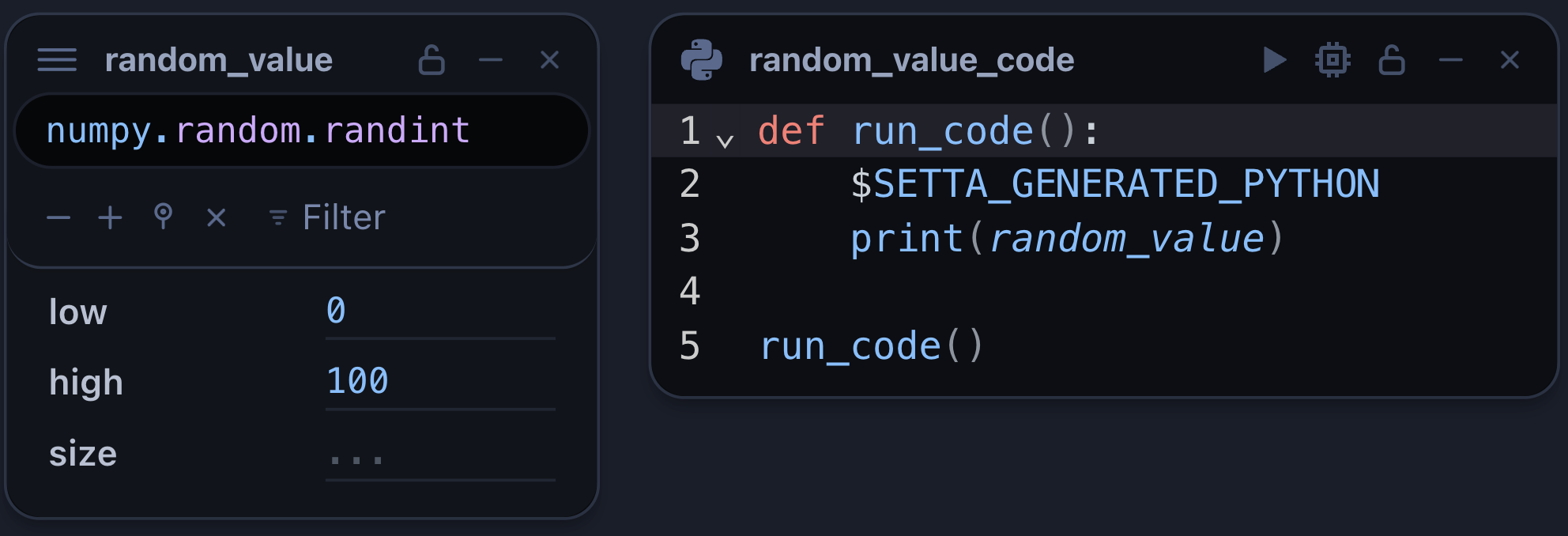
Here's the actual code that gets run:
def run_code():
    low = 0
    high = 100
    random_value = numpy.random.randint(low=low, high=high)

    print(random_value)

run_code()
Generated Python Imports
If inferImports is enabled in your settings, then the inferred import statements are automatically added to the top of the code block that contains $SETTA_GENERATED_PYTHON.
However, if you'd like to customize where the import statements appear, then you can use $SETTA_GENERATED_PYTHON_IMPORTS.
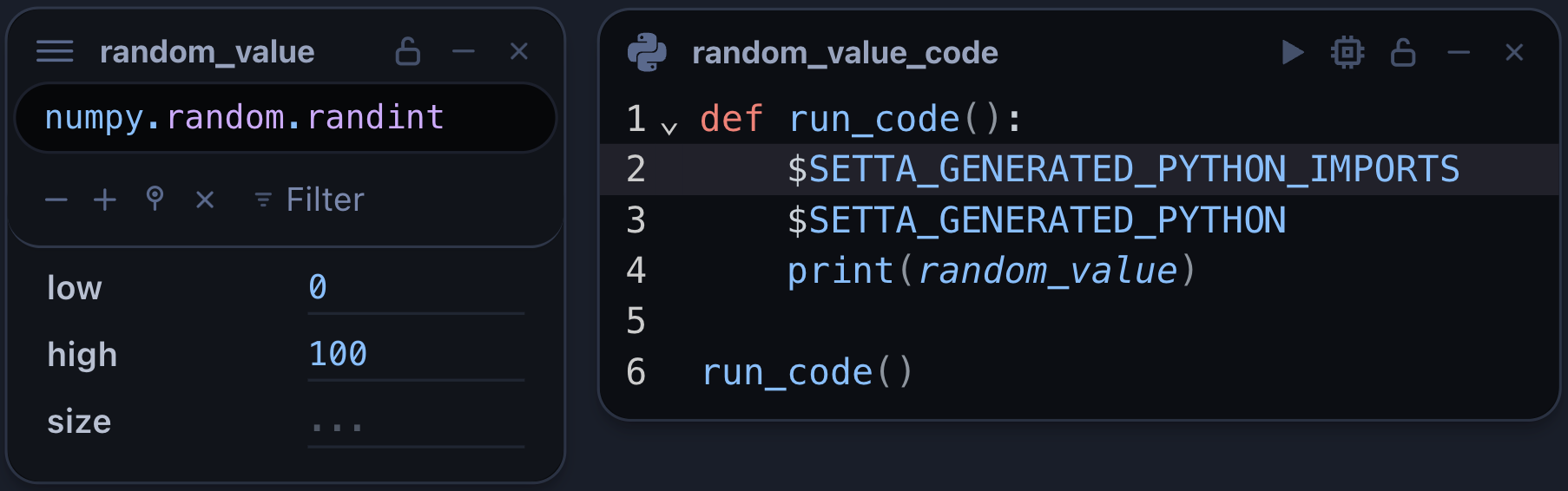
Here's the actual code that gets run:
def run_code():
    import numpy.random
    import numpy

    low = 0
    high = 100
    random_value = numpy.random.randint(low=low, high=high)

    print(random_value)

run_code()
Referencing section metadata
Prefix a code block's section name with $ to access its metadata.
- Version name:
$section_name$version - Code block import path:
$section_name$import_path - Code block runtime file path:
$section_name$file_path
Here's an example using all 3:
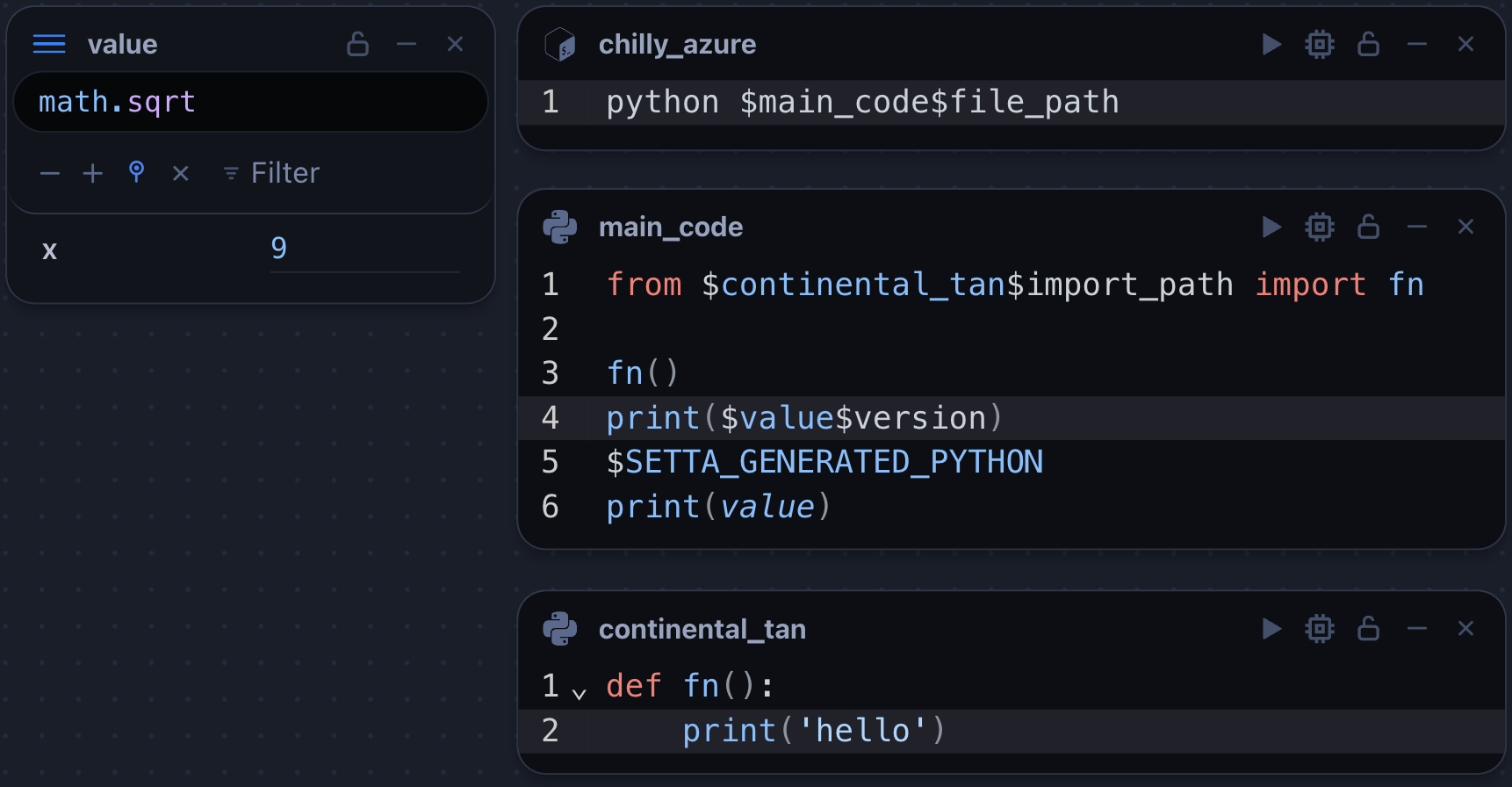
Running the bash script (section named chilly_azure) will print the following:
hello
value@static_blue
3.0
The hello comes from the fn() call, and the static_blue is the currently selected version of the value section.